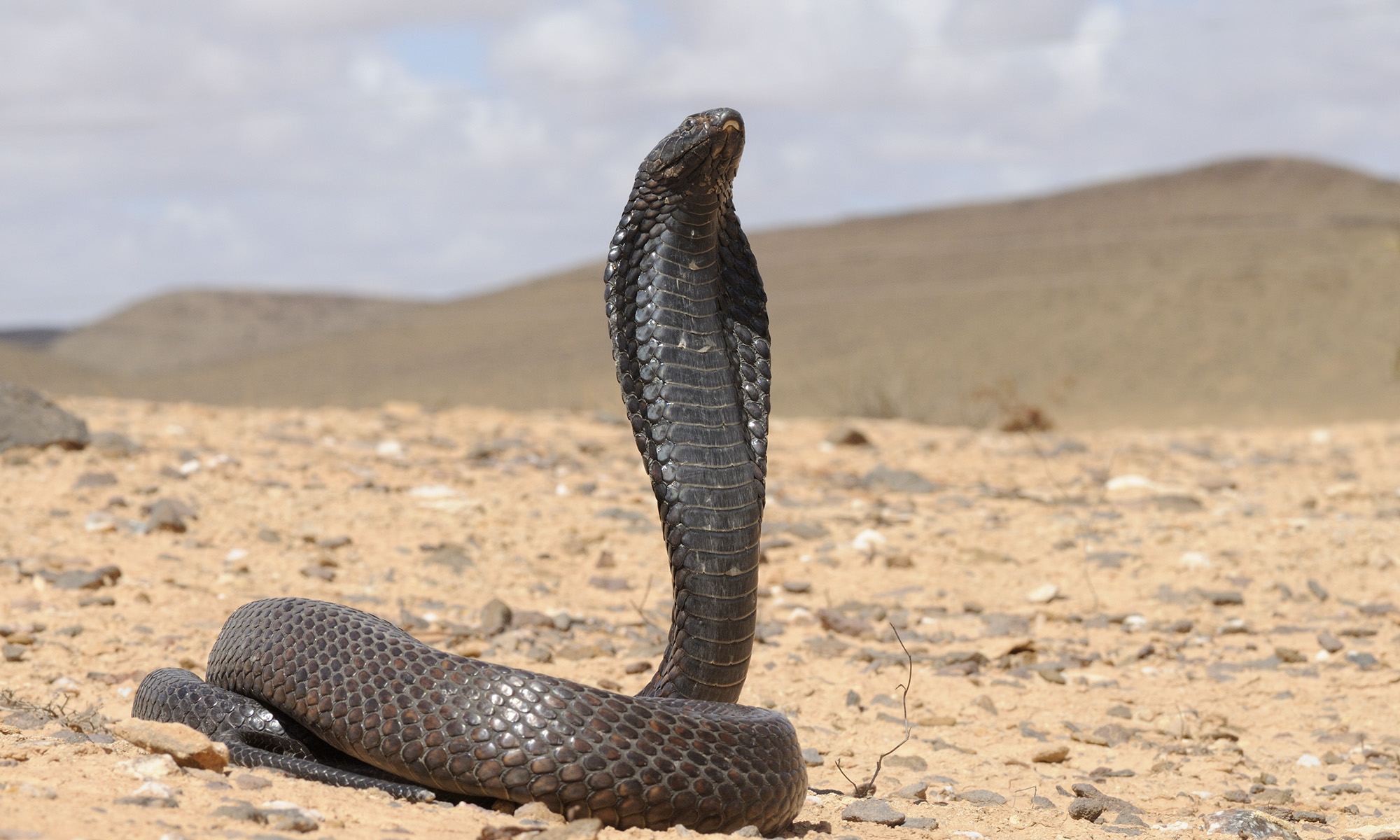
Acanthodactylus longipes. Merzouga (Marruecos). Foto: © Mario Schweiger.
Acanthodactylus longipes
Mapa de distribución de
Acanthodactylus longipes
en Marruecos.
Galería multimedia: 3 fotografías. [ENTRAR]

Como parte del proceso para asegurar que la información contenida en esta web sea lo más correcta y fiable posible, las fichas son publicadas inicialmente como BORRADOR.
La información contenida en las fichas con estatus de BORRADOR está pendiente de ser revisada, completada y validada. Puede ser por tanto modificada o corregida en cualquier momento sin previo aviso.
Una vez la información es revisada y validada, la ficha pasa al estatus de VALIDADA, lo que significa que se da por buena la información contenida.
Las fichas validadas pueden ser igualmente actualizadas para incluir nuevos datos, publicaciones, poblaciones descubiertas y cualquier otra información relacionada con la especie.
Para citar esta página:
Mario Schweiger: Acanthodactylus longipes Boulenger, 1918 en Marruecos y Sahara Occidental.
Disponible en www.moroccoherps.com/ficha/Acanthodactylus_longipes/. Consulta realizada el 20 de mayo de 2013.
Para citar www.morocoherps.com en su conjunto:
Anfibios y Reptiles de Marruecos y Sahara Occidental.
Disponible en www.moroccoherps.com. Consulta realizada el 20 de mayo de 2013.
Acanthodactylus scutellatus var. longipes Boulenger, 1918;
Acanthodactylus longipes Bons & Girot, 1962
Acanthodactylus longipes panousei Bons & Girot 1964 is, following Crochet et al., 2003 not valid.
Acanthodactylus longipes belongs to the A. scutellatus group. Over a wide range from Morocco in the west to Libya in the east it shares the same distribution and also nearly the same habitat with Acanthodactylus dumerilii.
Male. Merzouga (Morocco). Photo: © Mario Schweiger.
It is nearly impossible to assign a specimen to one of these two species in field, because they share most of the diagnostic features. Both species only differ in the number of dorsal scale rows, but these counting are hard to do without a magnifier and on a life specimen.
| A. dumerilii | A. longipes | |||
|---|---|---|---|---|
| Dorsal scale rows at midbody | 39 - 51 | 55 - 57 | ||
| Ventrals transversal rows | 12 - 17 | 13 - 19 | ||
| Ventrals longitudinal rows | 28 - 38 | 28 - 37 | ||
| Supraciliary granules rows | 1 1.5 2 2.5 | 55.7% 16.2% 27.0% 1.1% |
1 1.5 2 2.5 3 | 7.8% 6.3% 62.5% 0.9% 12.5% |
For us, the most easy difference in the field was the coloration of both species. While A. dumerilii shows some dark brown to black tiny spots on the flanks, these have been lacking in all A. longipes specimens. Therefore, A. longipes has a much more uniform appearance in coloration.
Acanthodactylus longipes is a lizard species of the open, wind blown dunes. We observed them high up in the dunes or in dune valleys, far away from any vegetation. Only a very few specimens have been encountered at the edge of dunes with some more dense vegetation (bushes, halfa grass), where it shares the habitat with A. dumerilii (own observations at Erg Chebbi, SE Morocco). It hides in self burrowed holes, which are digged every day new.
Like other desert species, it is active during full sunshine on the hot sand. To avoid burnings, it lifts its body or its feet from the hot sand regulary.
Acanthodactylus longipes is distributed throughout the Sahara from the Atlantic coast in the west (Mauritania) the Sinai in the east. To the south it lives up to the Sahel zone. In Morocco Acanthodactylus longipes lives in the dunes of Erg Chebbi and the dunes of Mhamid. There is no official record for the Western Sahara, although it is known from very close regions in Mauritania (dunes of Ouarane) (Geniez et al. 2004).
Habitat. Merzouga (Morocco). Photo: © Mario Schweiger.
We could observe them only on large open dunes with no or just very few vegetation. Near the Erg Chebbi, where it is very common, we didn’t find it on smaller dunes, separated by less than 2 kilometers of black Reg desert from the Erg, some kilometres north of Merzouga.
Whole range of species: Lower risk-least concern (LR-Lc).
Todos los contenidos © 2011-2012 www.moroccoherps.com. El copyright del texto, imágenes, y otros contenidos de www.moroccoherps.com pertenecen a los autores, fotógrafos, y otros artistas que han creado estos materiales, y no pueden ser usados sin permiso de los propietarios del copyright.
Diseño, programación y mantenimiento de la web: J. Gállego.